
- By Admin
- Scar Procedures
- July 29, 2026
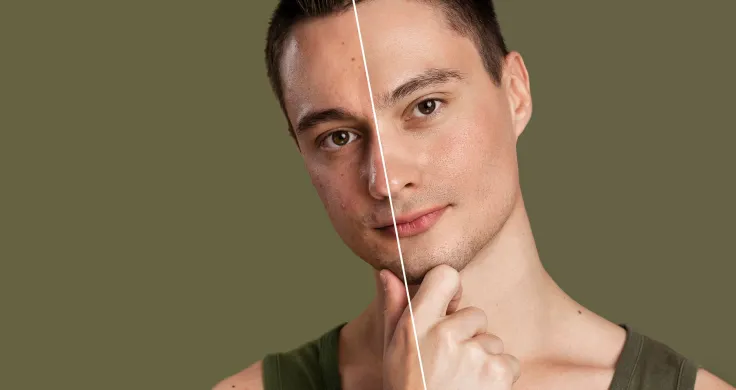
Subcision Before and After: What Results Can You Expect?
A Cosmetic Plastic Surgeon's Guide to Understanding Subcision Results & Recovery
Subcision is widely recognized by cosmetic and reconstructive plastic surgeons as the gold-standard procedure for treating tethered, depressed acne scars—particularly rolling scars.
If you are dealing with broad, wave-like dips on your cheeks or temple region, understanding how subcision works from a surgical perspective will help you set realistic expectations for your before-and-after transformation.
What Happens Beneath the Skin During Subcision?
To understand your results, it helps to understand why the scar exists in the first place.
When a deep acne lesion heals, it often creates tight, vertical bands of fibrous scar tissue in the dermis and subcutaneous layer. These bands act like anchors, pulling the surface skin downward into a depression.
During subcision, a specialized cannula or Nokor needle is inserted through a tiny entry point. By fanning the instrument beneath the scar, the surgeon mechanically severs these fibrous anchor bands.
- The Release: As the bands snap, the downward tension on the skin is immediately relieved.
- The Healing Signal: The controlled micro-trauma triggers your body's natural wound-healing cascade, stimulating new collagen production in the space created beneath the scar.
Timeline of Results: What to Expect Before & After
Scar remodeling is a process, not an overnight event. Here is what your recovery and results timeline typically looks like:
1. Immediate (Days 1–7): Initial Lift & Swelling
You will notice an immediate leveling of the skin. However, a significant portion of this initial lift is due to localized swelling (edema) and slight internal bruising (hematoma). Mild to moderate bruising, slight tenderness, and minor swelling are expected for 3 to 7 days.
2. Intermediate (Weeks 2–4): The Settling Phase
As the initial swelling completely subsides, the skin surface may appear to settle back down slightly. This is normal. Beneath the surface, fibroblasts are just beginning to migrate into the treated area to deposit new type-III collagen.
3. Long-Term (Months 2–6): True Collagen Remodeling
True structural improvement becomes visible as new, healthy collagen fibers mature into strong type-I collagen, permanently supporting the skin contour from below. Scars appear visibly shallower, and the skin catches light much more evenly.
Enhancing Subcision: Combination Protocols
While subcision alone provides significant improvement, combining it with complementary procedures yields superior before-and-after results:
| Combination Modality | Purpose | Why Plastic Surgeons Recommend It |
|---|---|---|
| Subcision + PRP (Platelet-Rich Plasma) | Healing & Tissue Growth | Growth factors accelerate collagen synthesis and speed up recovery time. |
| Subcision + Micro-Fat Grafting / Sculptra | Volume Replacement | Acting as a physical bio-filler, the tissue graft prevents the severed bands from re-tethering during healing. |
| Subcision + MNRF / Laser Resurfacing | Surface Texture | While subcision addresses deep structural anchors, energy devices smooth out the superficial dermis for a polished texture. |
Realistic Expectations & Session Requirements
- Improvement Per Session: Most patients experience a 30% to 50% improvement in deep rolling scars after a single subcision session.
- Number of Sessions: Severe or deeply tethered scarring typically requires 2 to 4 sessions, spaced 6 to 8 weeks apart.
- Scar Types: Subcision is specifically designed for rolling scars and some deep boxcar scars. It is not effective for narrow ice-pick scars (which respond better to TCA CROSS or punch excision) or hypertrophic/keloid scars.
- Surgeon's Note: Achieving smooth, natural-looking results requires precise depth control. Placing the instrument too shallow can cause superficial skin damage, while going too deep reduces efficacy. Always consult a qualified plastic surgeon or specialist who routinely performs advanced scar revision protocols.
