
- By Admin
- Acne Scars
- July 29, 2026
Acne Scar Treatment in Chennai: Options and Results
A Clinical & Cosmetic Plastic Surgery Guide to Advanced Scar Revision
Acne scarring is one of the most common concerns brought to cosmetic and reconstructive plastic surgery clinics across Chennai. Many patients come in frustrated after trying generic OTC creams or standard salon treatments with little to no change.
The key reason single treatments fail is simple: acne scars are rarely all the same type. A single cheek can feature deep ice-pick pits, tethered rolling depressions, and superficial boxcar marks. Achieving a smoother skin contour requires mapping out the specific scar types and combining targeted clinical and surgical modalities.
Scar Categories & Surgical Matching
Before choosing a procedure, plastic surgeons categorize scars based on depth, tissue loss, and structural tethering:
| Scar Profile | Appearance | Primary Surgical & Clinical Modalities |
|---|---|---|
| Ice-Pick Scars | Deep, narrow, V-shaped pits extending into the deep dermis | TCA CROSS (chemical reconstruction) or Punch Excision |
| Rolling Scars | Broad, undulating waves pulled down by fibrous anchor bands underneath | Subcision (releasing tethered bands) + Autologous Fat Grafting / PRP |
| Boxcar Scars | Round or oval depressions with sharp vertical edges | MNRF (Microneedling Radiofrequency), Fractional CO₂ / Erbium Laser |
| Hypertrophic Scars | Raised, thick tissue formed from excess collagen build-up | Intralesional steroid injections, laser remodeling, or silicone therapy |
Key Clinical & Surgical Treatment Options in Chennai
1. Surgical Subcision (For Tethered Rolling Scars)
When scar tissue forms beneath a pimple, fibrous bands pull the epidermis downward into a wave-like depression.
How it works: Under local anesthesia, a specialized cannula or Nokor needle is passed beneath the scar to mechanically sever the fibrous bands. This releases the downward pull, allowing the skin surface to lift naturally.
The Plastic Surgery Advantage: Subcision can be paired immediately with micro-fat grafting or PRP (Platelet-Rich Plasma). Inserting a small cushioning layer prevents the fibrous bands from re-tethering during healing.
2. Microneedling Radiofrequency (MNRF)
For patients in Chennai's tropical climate, high-melanin skin (Fitzpatrick Types IV–VI) requires energy devices that minimize post-inflammatory hyperpigmentation (PIH).
How it works: Ultra-fine insulated needles deliver controlled radiofrequency energy into the dermis while sparing the surface pigment-producing cells (melanocytes).
Best for: Smoothing overall texture, tightening broad boxcar scars, and boosting long-term neocollagenesis (new collagen growth).
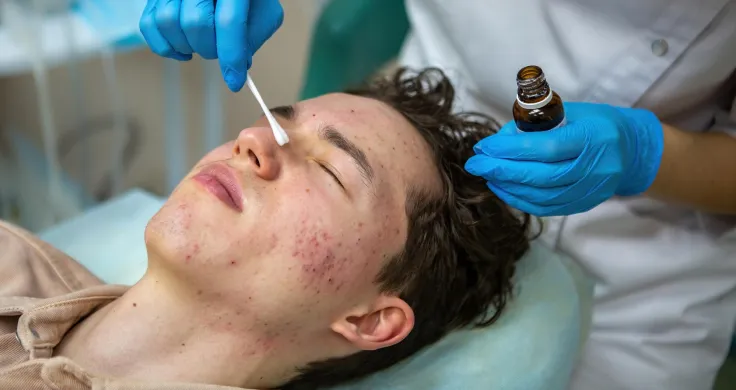
3. Chemical Reconstruction of Skin Scars (TCA CROSS)
Narrow, deep ice-pick scars often do not respond well to lasers because the energy cannot reach the bottom of the track.
How it works: High-concentration Trichloroacetic Acid (TCA 70–100%) is pinpointed into the base of each ice-pick pit using a micro-applicator. This induces localized tissue coagulation, forcing the walls of the scar to fill in with fresh collagen over time.
4. Fractional Ablative & Non-Ablative Lasers
For superficial to medium-depth texture irregularities, lasers gently vaporize tiny microscopic thermal zones across damaged skin.
Considerations for Chennai Patients: Because UV exposure increases the risk of post-treatment dark spots, post-laser care strictly mandates high-SPF broad-spectrum sunscreens, gentle moisturizers, and limited direct sun exposure during the initial 7–10 days.
Expected Timelines & Realistic Results
- No single session cures severe scars: Most comprehensive treatment protocols involve 3 to 5 customized sessions spaced 4 to 6 weeks apart.
- Collagen remodeling takes time: While subcision yields an immediate lift, full structural improvement builds gradually over 3 to 6 months as your body synthesizes new collagen.
- Realistic Goal: An overall texture improvement of 60% to 80% is considered an outstanding result in clinical scar revision.
Clinical Note: Active acne must be fully controlled before starting invasive scar revision to prevent new scars from forming during treatment.
